Friday, December 30, 2011

Pastor's Circle - Steve Blakemore

Steve Blakemore is the Professor of Philosophy at Wesley Biblical Seminary in Jackson, Mississippi, and the pastor of Wesley Chapel He joined the Pastor's Circle to talk about the new year. Below are the "CliffsNotes" of his interview.

2012 is the end of the world?
According to the people who have studied this thing, 2012 is when the Mayan calendar predicted the end of time.
How should we as pastors talk to our congregations about the Second Coming?
First of all, I think we need to talk about the Second Coming to people in very serious terms, but in hopeful terms, and in responsible terms.

What I mean by that is this: quite often, people take the Second Coming and make it an escapist doctrine: the world's just going to keep getting worse, and we just have to hang on until Jesus comes.

In Biblical terms, the Second Coming was always a hope, a hope that Jesus was going to come and bring his Kingdom.

And because we teach that hope, we have to say to our congregations that anything that is not of the coming Kingdom is not going to matter.

Why would we invest our lives in things that don't matter? Let's be about things that are of the Kingdom, rather than things that will perish.
What's your take on New Year's resolutions?
When I was younger, I was much bigger into trying to make New Year's resolutions, until I realized that I was an abject failure at keeping them.

Resolutions are about people realizing that time is passing in their lives. Even in very ancient cultures, people look at the beginning of the year as a time to look at beginning life anew.

There's something about marking the passing of time that can be sobering to us. In that sense, there's some helpfulness in taking a serious look at our lives in view of who God is calling us to be.

I think it does have some benefit. Accountability could probably help us there, though.
How important is it to reflect on the past year?
In the book of Deuteronomy, it is all about remembering the law of the Lord. Remembering what God has done is the inspiration for laying down a new trajectory in life.
What cultural challenges will the Church face in 2012?
One of the things that most concerns me right now is the potential for a divide among Christians in regard to how we should relate to the political field.

One of the great challenges we're going to have to face is probably how we're going to think about the Church's relationship to the State.

How do we think about politics? What do we do when we find a Christian, a true believer who believes in big government? Or when a big government Christian finds someone who doesn't agree with him?

I think this new election year that we're facing is going to be a real time of potential division for Christians. That's the kind of cultural thing that worries me.

Tuesday, December 27, 2011

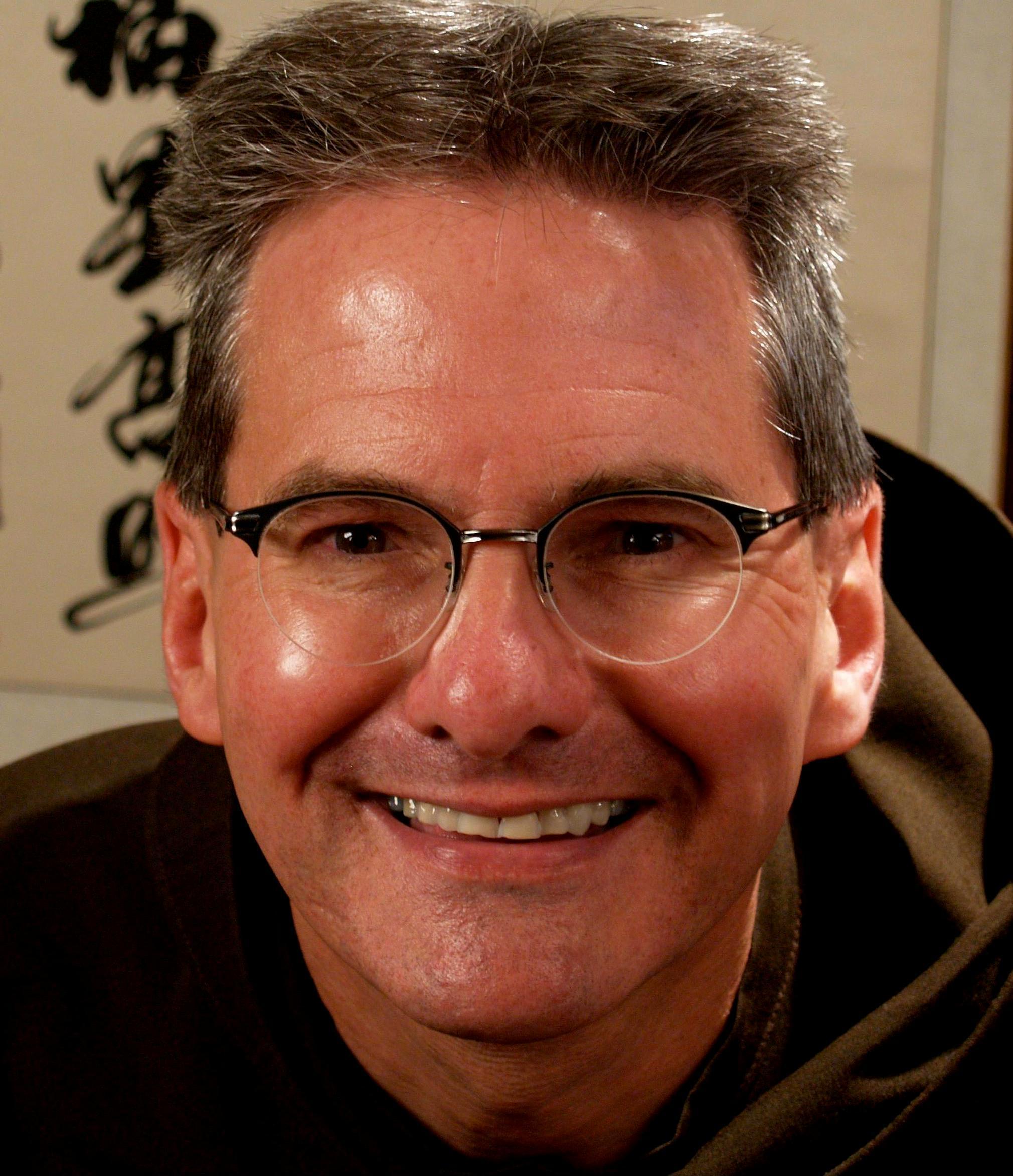
Pastor's Circle - Albert Haase

Father Albert Haase, a Franciscan priest, joined the Pastor's Circle to discuss the "challenge of Christmas". Below are the "CliffsNotes" of his interview.

What are your reflections on Christmas this year?
Let me tell you something about Christmas. We often talk about how the feast has become commercialized. 
But I think there is something much more important that many of us miss. I like to talk about having an "adult Christ" at Christmas. 
We have turned our celebration of Christmas day into a celebration for children. But Christmas really has an adult challenge.

In the Roman Catholic tradition, we always celebrate the feast day of St. Stephen, the first martyr, the day after Christmas.

I think what that says to us is this: this Babe also comes with a great responsibility. If we're going to accept Jesus Christ into our lives, we have to be willing to die for that. The cross always shadows the crib.

The Christmas celebration is wonderful, but let's never forget that it also requires us to take a hard stand for the God that we have in our lives.
In Nigeria, for instance, Christians were killed for celebrating Christmas.
Also in Pakistan, where two Christian churches on Christmas Eve were attacked by Hindus. In America, we are so insulated from this kind of having our faith put at risk.

So much of American culture is Christian, we've really lost the counter-cultural edge of Christianity.
So what does it mean for us to take a stand?
No matter where anyone is in the world, we all experience injustices. In our homes, businesses, we see people treated with disrespect rather than dignity.

So you and I might not risk our lives by walking in the doors of the church on Sunday morning, but we still have a stand to take when we walk into the office.

You and I disavow Jesus Christ every time we turn a blind eye to an injustice that we clearly see.
Injustice was at Jesus' birth too, with the slaughter of the innocents.
I think that's really interesting. Herod hears about the birth of this newborn king, and he is so threatened that he has all the two-year-old boys slaughtered around the vicinity of Bethlehem.

You and I don't slaughter children, but how many times have I slaughtered the reputations of other people because my little power base was being threatened?

Christianity is meant to be a religion of life. There is no other way around it. But we as Christians often find it "inconvenient" to stand up for that.

Thursday, December 22, 2011

Pastor's Circle - Jim Garlow

Dr. Jim Garlow pastors at Skyline Church in San Diego, CA. He also serves as the chairman of Renewing American Leadership, and is the author of a number of books. 

He joined the Pastor's Circle to talk about using buildings for discipleship. Below are the "CliffsNotes" of his interview.

You build your facilities with the intention of discipleship. Tell us about that.
We build our building with a great symbolism. Out in front will be a sidewalk called the Heritage Walk.

On the tiles will be the names of the top 300 leaders in Christian history. I can use it as a teaching device so that we can help the people understand the level of sacrifice that came before them.

Right out beside that is a playground with a sidewalk and the books of the Bible, in a hopscotch pattern.

As you walk on this heritage sidewalk is a fountain that we call the "Revelation Fountain", based on Revelation 4. It's also a baptismal font.

The fountain is loaded with symbolism, all based around Revelation chapter 4. All this is done to draw people's hearts in. All this is designed for beaming strong, theological messages.
Do you include contemporary leaders in your Heritage Walk?
I do. It starts actually with the figures of the Old and New Testaments. The trinitary revelation is built into it. Then it goes through church history.

Of the three hundred leaders on there, 290 of them are deceased. But there are 10 that are still living; Billy Graham, for instance, is on there.
Who are a few more of those leaders?
Jim Elliot, for example, never made it to his 30th birthday. He was included on there just by virtue of the impact he had by his death.

There are other names; Orange Scott was one who fought hard to free the slaves. He didn't live past 37.

You don't have to live long to have a huge impact.

Tuesday, December 20, 2011

Pastor's Circle - Daniel Simmons

Dr. Daniel Simmons serves as the senior pastor of Mt. Zion Baptist Church. He joined the Pastor's Circle to discuss the characters in the Christmas story. Below are the "CliffsNotes" of his segment.

Why did God choose the people he did for the Christmas story?
I think there are several reasons. Joseph and Mary are chosen because they are in the lineage of David.

But when you're talking about Simeon, or Zechariah, they were chosen because of their faithfulness to God.

When Simeon prayed to God that he would "see" that day, I think God honored that because of his dedication.
How important is that dedication in our lives?
I always say to my congregation that God will not choose people who are not doing anything, who have not proven themselves in some other way.

Obedience is critical. The idea of Christ being Lord and speaking to us, and that radical obedience. When God comes in, it's not a democracy.
How can we hear from God in the way that Joseph or Mary did?
First of all, we have to believe that he does speak. And secondly, we have to spend some time in his Word. We have to develop that ability to hear him.

Find those places in the Bible where God surprised people, and ask God to show us how he can do it in our lives.

Monday, December 19, 2011

Pastor's Circle - Gil McKee

Gil McKee, Senior Pastor of the First Baptist Church of Tuscaloosa, joined the Pastor's Circle today to discuss giving at Christmas. Here are the "CliffsNotes" of his segment.

What is a new insight God has given you into Christmas this year?
That's easy, and I'm glad you asked. Most people listening are aware of what we went through in April with the tornado.

I think what God has done in our church through that has been amazing. I've seen my church give and give and roll their sleeves up and work and work.

Even at Christmas, I'm seeing my church question what we really need.
Where do you see giving in the Christmas story?
Obviously, just go to the gift of God. For God so loved the world that he gave. This is about giving. God's love for us was so great that he gave the most valuable gift he could give.

And then of course, there are those who came presenting gifts to the Christ Child, but I think the whole theme of the story is God's Gift.

If I want to love as God loves, then I'm not caught up in getting; I'm caught up in giving. I think God has just reminded us of that in a very graphic way this year.
How do you keep that attitude stoked throughout the year?
I think you hit the nail on the head. One of the responsibilities pastors have is to keep that vision in front of people. For me, it just has to be a day-by-day, week-by-week thing.

I think for us, God is just birthing some new ideas and visions for our church family of how we can be a part of that ongoing ministry.
Why do we tend to become "takers"?
I think none of us are immune to the culture around us. Unfortunately, I think some of it has crept into the church.

In the church movement back in the 70s and 80s, there was an emphasis on meeting needs. Unfortunately, it became meeting the needs of those in the church.

You know as well as I do that there are many people out there who come to church only to have their needs met. We've got an entire mindset that we are going to have to work hard to change.

In many ways, we've become no different in our mindset than those outside the church.
Why is that so easy to get away from?
Most of us, when we think about ministry and our church time, spend the vast majority of our time inside the walls of the church.

Jesus did the exact opposite. He spent the vast majority of his time outside of the walls of the synagogues.

I think the good news is that there is a renewal and a revival of that vision. I think that churches realize that they have strayed a little bit from that vision.

We have to remember, it is still the Lord's church. He will do anything in us, to us, through us to get us back inside his will.

Friday, December 16, 2011

Pastor's Circle - Jerry Horner

Jerry Horner has been a university professor and administrator since 1962. He currently functions as the Executive Director of New Creation Ministries. He joined the Pastor's Circle to talk about the Virgin Birth. .Below are the "CliffsNotes" of his interview.

Is the Virgin Birth important?
Absolutely. In the birth of Jesus, the chain of cause and effect was broken.

The Apostle Paul builds heavily on this. In his letter to the Romans, he gave a contrast between the old humanity, headed by Adam, and the new humanity, headed by Jesus Christ.

By birth, we are under the old humanity, characterized by sin and death. But Jesus Christ is the new Adam. He is the beginning of a new humanity. And without the Virgin Birth, that is not possible.

Christian belief builds heavily on such doctrines.
How important is it that we believe in it?
That is the key. If a person said he doesn't believe in the Virgin Birth, I would not question his salvation, but I would question his view of Scripture. 
The entirety of Christian doctrine rests on the veracity and reliability of the Bible.

If one part of Scripture is suspect, what about the rest of it? If I'm at liberty to cut out one part out of the Bible, why not any other part?

If I'm a judge of Scripture, Scripture is no judge of me. It comes down to submission to the Word of God.
What is one major part of the Christmas narrative that we miss?
I don't think that we can get away from the all-encompassing love of God. The Christmas Story is a love story. I think John 3:16 is the greatest commentary on the Christmas Story. What more could God give?

Thursday, December 15, 2011

Pastor's Circle - Bert Harper

Bert Harper, chairman of the board and Director of Family Life and Pastoral Ministries of American Family Association, joined The Matt Friedeman Show today to talk about the decline of marriage and how we can bring revival. Below are the "CliffsNotes" of his interview.

There's a poll that says marriage is declining. Thoughts?
I saw the same article, and I remembered the push a few years ago by a certain denomination to say that we need to marry earlier.

Marriage is looked down upon in our society. The church is partly to blame. But I would say that the marriage rate in the church is significantly higher than in society.
What are the effects of cohabitation and fatherlessness on society?
The black community in  America has already experienced this trainwreck, with so much of their male population in prison because of fatherless homes.

You have close to 85% of the black population being raised in single-parent homes. If we continue to go down this road, it's going to be a disaster.

The direction that we go determines everything. God's looking for us to go in the right direction. Marriage and family is the right way to go.
How can America have a "turnaround"?
We've got to turn to God. The Bible says "repent." I know it's an old-fashioned term, but we've got to bring it back.

Let the Word of God speak. If we can let it do that, the Word has promised that it will go forth and do what it is supposed to do. It works in a home, it works in a church, it works in a community, and it works in a nation.
How can a pastor invite revival?
Demonstrate it. The thing that hurts me is how many pastors are falling into moral failure.

My wife and I are doing marriage conferences for pastors. Because if we preach one thing and do another, then it falls on deaf ears. This generation can spot hypocrisy.

And then live it. When they see Christ in you, I believe the message will ring true.